

CALERIE (2R01AG061378)
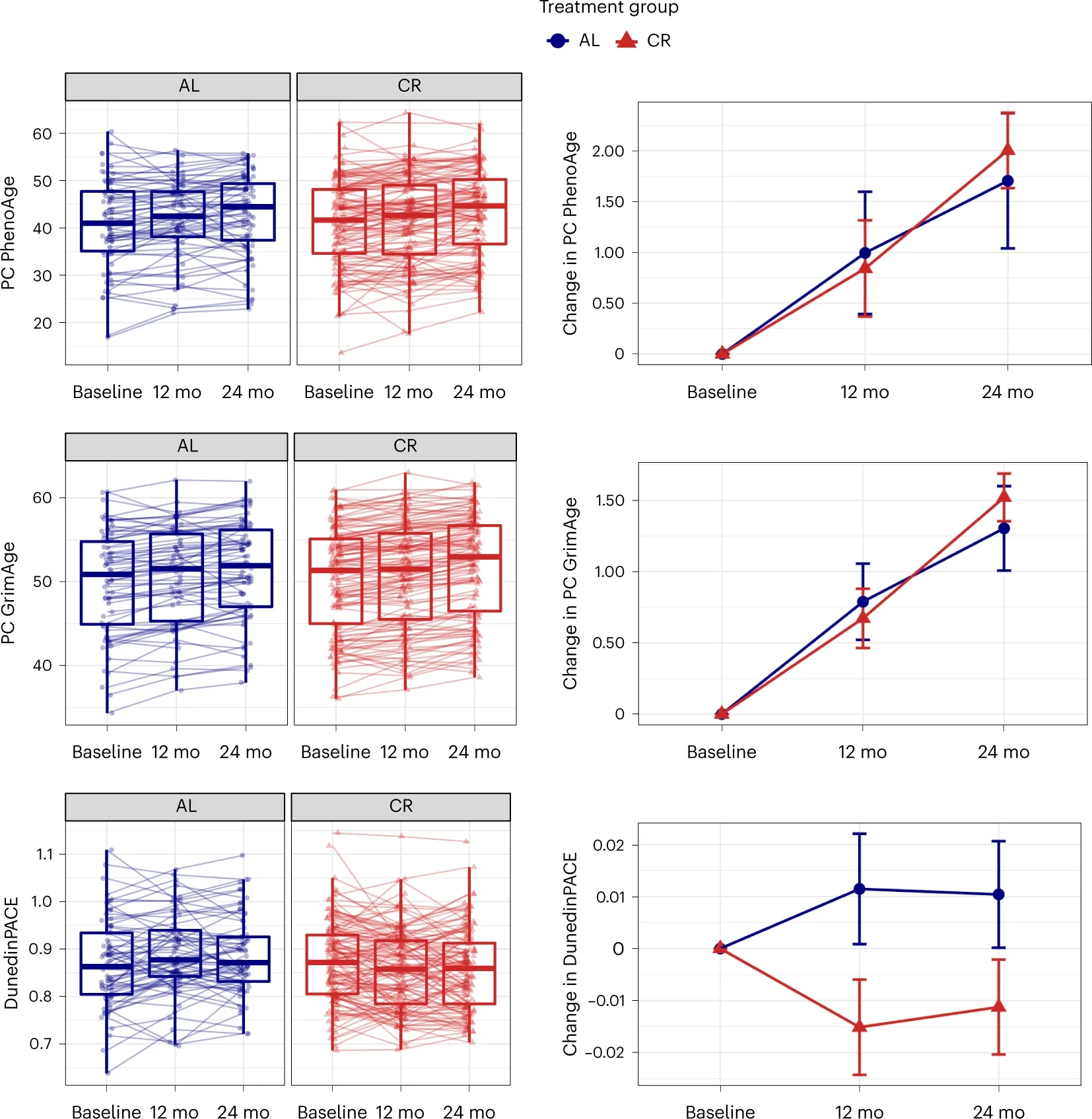
The graying global population makes interventions to extend healthy lifespan (healthspan) a public heath priority. Therapies targeting basic biological processes of aging show proof-of-concept in animals: early-to- midlife intervention can delay disease onset and prolong healthspan. But translating these geroprotective therapies to humans faces the barrier that human clinical trials of midlife geroprotective therapy would require decades of follow-up to measure healthspan extension. An alternative is a short-term accelerated geroprotector trial that tests if geroprotective intervention can slow the rate of biological aging. Biological aging is the gradual and progressive decline in system integrity that occurs with advancing chronological age. This process is thought to be the root cause of increases in morbidity and disability in later life. New research shows that biological aging can be measured in humans and that measures of biological aging predict human healthspan. Geroprotective therapies that target basic biological processes of aging are hypothesized to slow the rate of biological aging. Our original R01 project conducted the first-ever test of this hypothesis within a human geroprotector trial. We conducted new assays of stored biospecimens from the National Institute on Aging’s then recently-completed CALERIE Trial, which randomized 220 non-obese adults to 25% caloric restriction (CR, N=145) or ad libitum normal diet (AL, N=75) for a period of 2 years. This trial provided the opportunity to test if the best-established geroprotective intervention in animals, long-term caloric restriction, slowed the rate of biological aging in midlife humans, who are still young enough for age-related disease to be delayed or prevented. Our findings yielded highly promising results: CALERIE intervention slowed biological aging, as measured by blood-chemistry and blood DNA methylation biomarkers, and modified core biological pathways of aging as measured by gene expression analysis of adipose and muscle tissues. Now, we propose to expand this analysis to include proteomic data and to extend follow-up of the trial participants to 10 years post-intervention. All biospecimens necessary for this research are already collected or will be by the time this award is funded (the 10-year follow-up will finish data collection Summer 2025). Our project will generate a harmonized dataset linking DNA methylation and proteomic data across the two years of intervention and the 10-year post-intervention follow-up and (i) share the data publicly through the Aging Research Biobank; (ii) test the hypothesis that CALERIE slowed biological aging and determine if effects persisted across the decade following the intervention; and (iii) investigate biological pathways of aging modified by CALERIE intervention and mediating effects on aging and health. The proposed project will generate new knowledge about effects of caloric restriction on biological aging in humans and generate a unique and powerful data resource for geroscience.


Calen Ryan, PhD.
Studies Published with the Data:
Ryan CP, Corcoran DL, Banskota N, Indik CE, Floratos A, Friedman RA, Kobor MS, Kraus VB, Kraus W, MacIsaac J, Orenduff M, Pieper CF, White J, Ferrucci L, Horvath S, Huffman KM, & Belsky DW*. The CALERIE Genomic Data Resource. Nature Aging, Published online Dec 13, 2024
Waziry & Ryan et al. Effect of long-term caloric restriction on DNA methylation measures of biological aging in healthy adults from the CALERIE trial. Nat Aging 3, 248–257 (2023) doi:10.1038/s43587-022-00357-y
Das, J. K. et al. Calorie restriction modulates the transcription of genes related to stress response and longevity in human muscle: The CALERIE study. Aging Cell 22, e13963 (2023) doi: 10.1111/acel.13963.
Ramaker, M. E. et al. Epigenome-wide Association Study Analysis of Calorie Restriction in Humans, CALERIETM Trial Analysis. J Gerontol A Biol Sci Med Sci 77, 2395–2401 (2022) doi: 10.1093/gerona/glac168
Hastings, W. J. et al. Effect of long-term caloric restriction on telomere length in healthy adults: CALERIETM 2 trial analysis. Aging Cell 23, e14149 (2024) doi: 10.1111/acel.14149.
Bareja, A. et al. Liver-derived plasminogen mediates muscle stem cell expansion during caloric restriction through the plasminogen receptor Plg-RKT. Cell Rep 43, 113881 (2024) doi: 10.1016/j.celrep.2024.113881
Dorling, J. L. et al. Association between the FTO rs9939609 single nucleotide polymorphism and dietary adherence during a 2-year caloric restriction intervention: Exploratory analyses from CALERIETM phase 2. Exp Gerontol 155, 111555 (2021) doi: 10.1016/j.exger.2021.111555
Pribić, T. et al. A 2-year calorie restriction intervention reduces glycomic biological age biomarkers. medRxiv 2024.12.04.24318451 (2024) doi:10.1101/2024.12.04.24318451.
McGreevy, K. M., Radak, Z., Torma, F., Jokai, M., Lu, A. T., Belsky, D. W., Binder, A., Marioni, R. E., Ferrucci, L., Pośpiech, E., Branicki, W., Ossowski, A., Sitek, A., Spólnicka, M., Raffield, L. M., Reiner, A. P., Cox, S., Kobor, M., Corcoran, D. L., & Horvath, S. (2023). DNAmFitAge: biological age indicator incorporating physical fitness. Aging, 15(10), 3904–3938. https://doi.org/10.18632/aging.204538
Zhuang, B. C., Jude, M. S., Konwar, C., Yusupov, N., Ryan, C. P., Engelbrecht, H. R., Whitehead, J., Halberstam, A. A., MacIsaac, J. L., Dever, K., Tran, T. K., Korinek, K., Zimmer, Z., Lee, N. R., McDade, T. W., Kuzawa, C. W., Huffman, K. M., Belsky, D. W., Binder, E. B., Czamara, D., … Kobor, M. S. (2025). Accounting for differences between Infinium MethylationEPIC v2 and v1 in DNA methylation-based tools. Life science alliance, 8(9), e202403155. https://doi.org/10.26508/lsa.202403155
Ahn, C. et al. An optimized pipeline for high-throughput bulk RNA-Seq deconvolution illustrates the impact of obesity and weight loss on cell composition of human adipose tissue. bioRxiv 2024.09.23.614489 (2024) doi:10.1101/2024.09.23.614489.
Clark, J. P. et al. Caloric restriction reprograms adipose tissues in rhesus monkeys. bioRxiv 2025.03.03.641286 (2025) doi:10.1101/2025.03.03.641286.
Featured Publication: Waziry R¶, Ryan CP¶, Corcoran DL, Graf G, Huffman KM, Kobor MS, Kothari M, Kraus VB, Kraus WE, Lin DTS, Pieper CF, Ramaker ME, Bhapkar M, Das SK, Ferrucci L, Hastings WJ, Kebbe M, Parker DC, Racette SB, Shalev I, Schilling B, Belsky DW*. Effect of Long-Term Caloric Restriction on DNA Methylation Measures of Biological Aging in Healthy Adults: CALERIE™ Trial Analysis. Nature Aging, 3(3):248-257, 2023. PMC10148951


Calen Ryan, Ph.D.
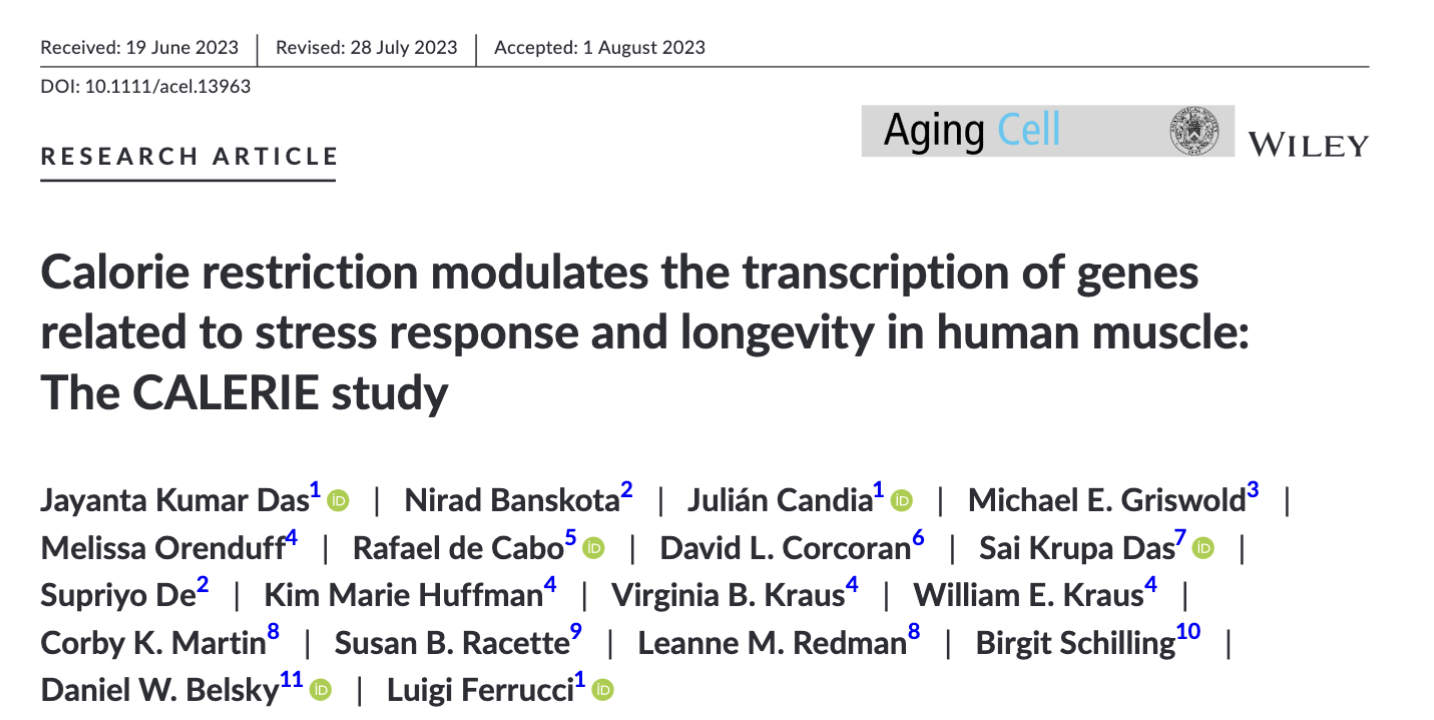
Featured Publication: Das, J. K. et al. Calorie restriction modulates the transcription of genes related to stress response and longevity in human muscle: The CALERIE study. Aging Cell 22, e13963 (2023) doi: 10.1111/acel.13963.

Luigi Ferrucci, PhD
Featured Publication: Ramaker ME, Corcoran DL, Apsley AT, Kobor MS, Kraus VB, Kraus WE, Lin DTS, Orenduff MC, Pieper CF, Waziry R, Huffman KM, Belsky DW*. Epigenome-wide association study analysis of calorie restriction in humans, CALERIE Trial analysis. Journals of Gerontology Series A: Biological Sciences, glac168. Published online August 15, 2022


Megan Ramaker, PhD